

Short Sale vs Cash Sale: Which Is Faster?
Understanding the Full Timeline from Offer to Closing, Including Approval Requirements, Processing Delays, and What Impacts Overall Sale Speed
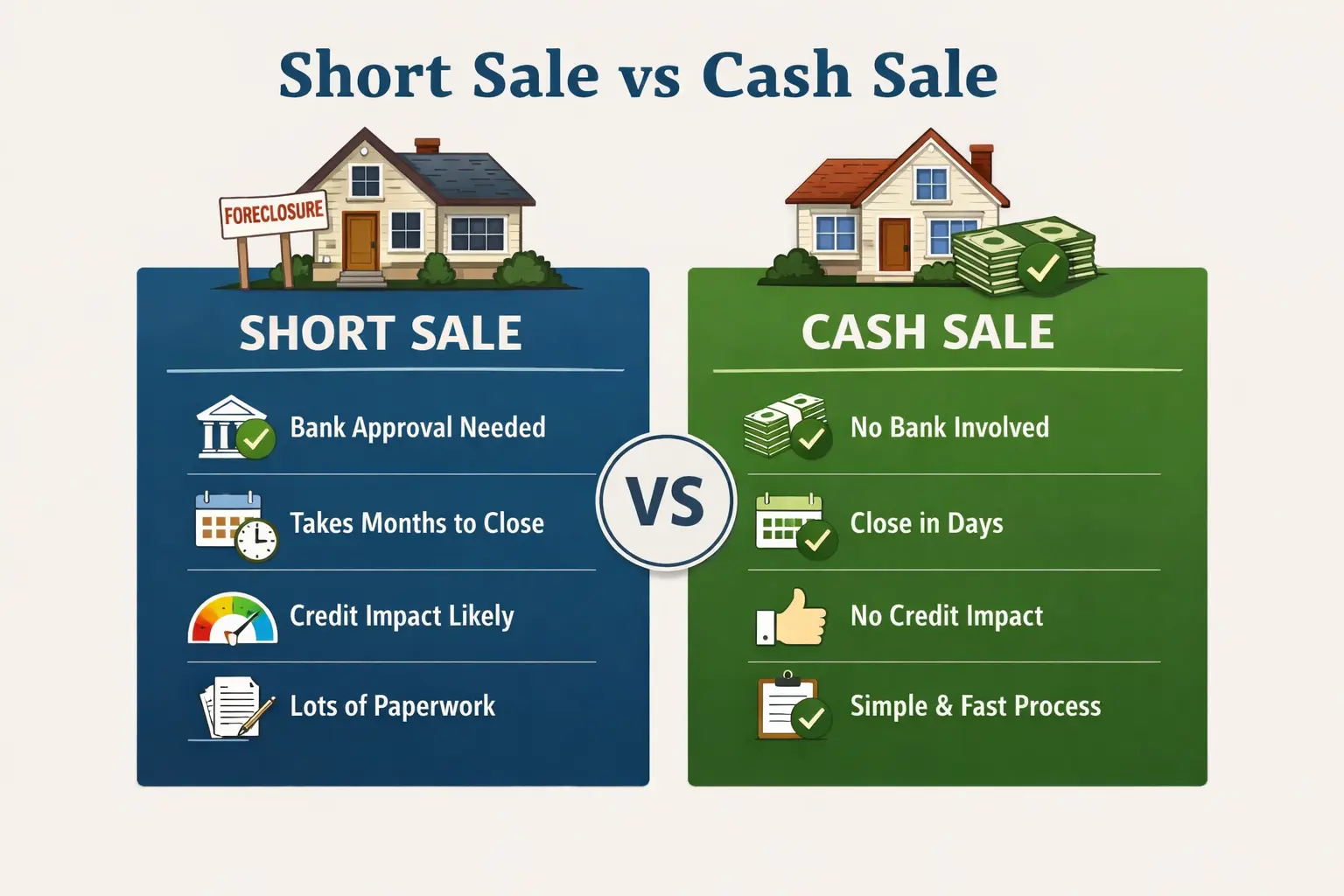
Cash sales close significantly faster than short sales, typically completing in 7-14 days compared to 90-120 days for short sales. The fundamental difference lies in approval requirements - cash sales need only buyer verification, while short sales require lender approval for accepting less than the full mortgage balance. This comprehensive comparison examines the key differences, timelines, and factors that impact each sale type to help sellers make informed decisions based on their specific circumstances and timeline needs.
At OT Home Buyers, extensive experience with both transaction types reveals that speed often determines the best selling approach, but financial considerations, credit impact, and market conditions also play crucial roles in the decision-making process.
Understanding Short Sales
A short sale occurs when a homeowner sells their property for less than the outstanding mortgage balance, requiring the lender's approval to accept the discounted payoff amount. This process involves multiple stakeholders beyond just buyer and seller, including the original lender, potentially multiple lienholders, and often mortgage insurance companies.
The complexity stems from each party's need to review and approve the transaction independently. Lenders require extensive documentation, including hardship letters, financial statements, tax returns, and a comparative market analysis to justify accepting less than the full debt. According to data from the National Association of Realtors, short sales typically take 90-120 days from offer acceptance to closing, with some extending even longer when multiple approvals are needed.
Bonus Tip: Sellers should gather all required financial documents before listing to prevent delays. This includes recent bank statements, pay stubs, tax returns, and a detailed hardship letter explaining the inability to continue mortgage payments.
Understanding Cash Sales
Cash sales involve buyers purchasing properties outright without mortgage financing, eliminating the lengthy loan approval and appraisal processes. These transactions require only proof of funds verification and basic title work, dramatically reducing the timeline to closing. The buyer's ability to close quickly provides significant advantages, particularly in competitive markets where speed can make or prevent a sale.
Cash buyers include individual investors, investment companies, and downsizing homeowners who have equity from previous property sales. Market data from Zillow Research shows that cash sales increased to 30% of all home transactions in 2023, with investors comprising approximately 60% of these buyers.
The simplified process involves:
-
Offer submission
-
Proof of funds verification
-
Basic inspection (often waived for speed)
-
Title work and closing
-
Fund transfer
Bonus Tip: Sellers requesting proof of funds upfront can filter out unqualified buyers and avoid wasting time with offers that cannot close quickly.
Timeline Comparison
The speed difference between these sale types becomes particularly clear when examining their respective processes side by side:
| Process Stage | Short Sale Timeline | Cash Sale Timeline |
| Initial Offer | 1-3 days | 1-3 days |
| Lender Approval | 30-90 days | Not required |
| Buyer Financing | Not applicable | Not applicable |
| Appraisal | 7-14 days | Often waived |
| Title Work | 14-21 days | 7-10 days |
| Closing | 7-10 days | 1-3 days |
| Total Time | 90-120 days | 7-14 days |
Things to Consider Before Making a Decision
Several critical factors influence whether a short sale or a cash sale better serves your needs. Financial implications stand foremost - short sales damage credit scores by 85-160 points according to FICO, while cash sales have no credit impact. However, short sales may be necessary when homeowners owe more than their property's worth.
Tax consequences differ significantly. Short sales often trigger forgiven debt income, though the Mortgage Forgiveness Debt Relief Act may provide relief in specific circumstances. Cash sales typically generate capital gains taxes only if the property has appreciated substantially and the owner doesn't qualify for exclusions.
Market timing affects decision-making, too. In seller's markets with multiple offers, cash buyers frequently close with minimal contingencies and potentially above the asking price. Short sales appeal primarily to buyers seeking discounts and willing to wait for lender approval.
Bonus Tip: Sellers facing foreclosure should start the short sale process at least 90 days before the scheduled auction date to allow sufficient processing time.
Frequently Asked Questions
How much less do short sales typically sell for compared to market value?
Short sales generally sell for 10-20% below market value, reflecting both the property's condition and the lender's desire to minimize losses. The exact discount depends on market conditions, property condition, and the lender's assessment of foreclosure costs versus short sale proceeds.
What happens if multiple lenders hold liens on my property?
Multiple lienholders complicate short sales significantly. Each lender must approve the sale and agree on their portion of the proceeds. Junior lienholders often receive minimal payment, making approval challenging. This scenario frequently extends timelines beyond the typical 120-day range.
Can I buy another home immediately after a short sale?
Most conventional loan programs require 2-4 years waiting periods after short sales, with some exceptions for extenuating circumstances. FHA loans require 3 years, while conventional loans typically mandate 4 years. Cash purchases immediately remain possible if funds are available.
Do I need a real estate agent for a cash sale?
While not legally required, professional representation helps ensure proper documentation, fair pricing, and smooth closing processes. Particularly with investment buyers, having an agent provides protection against unfair terms and helps navigate complex transactions.
What fees are involved in cash sales versus short sales?
Cash sales typically involve fewer fees - mainly agent commissions (usually 5-6%), title insurance, and recording costs. Short sales include these, plus potentially additional lender processing fees, attorney fees, and sometimes seller concessions to the buyer for the extended timeline complexity.
Key Takeaways
The choice between a short sale and a cash sale fundamentally depends on your timeline needs, financial situation, and market conditions. Cash sales provide speed and simplicity when time is critical, closing in as little as one week with minimal complications. Short sales, while slower and more complex, offer solutions for underwater mortgages when immediate cash isn't necessary.
Evaluate your specific circumstances honestly - if you're facing foreclosure, need to relocate quickly, or cannot afford monthly payments, the cash sale's speed likely outweighs potential price differences. For those with time flexibility and negative equity, short sales might prevent foreclosure while allowing more time to arrange alternative housing.
Consider consulting with both real estate professionals and tax advisors before making your final decision, as the long-term financial implications extend well beyond the immediate transaction.
Contact Information
OT Home Buyers specializes in providing fast cash offers for homeowners seeking quick closing alternatives. For a confidential consultation about your property and timeline needs, contact Vince at vince@otinvestmentsgroup.com or call 682-267-7741. OT Home Buyers can typically provide a fair cash offer within 24 hours and close in as little as seven days if needed.
Sources
National Association of Realtors - National Association of Realtors
Zillow Research - Zillow Research
FICO - FICO
Related Articles
By William Henry • Mar 20, 2026
Can You Sell If Your Home Is in Pre-Foreclosure?
Yes, you can sell your home during pre-foreclosure, and in many cases, it’s the most effective way to avoid foreclosure and reduce long-term credit damage
By William Henry • Jan 26, 2026
How to Sell My House When Property Taxes Are Overdue
Practical options to sell your home fast, avoid tax penalties, and move forward without added financial pressure
By William Henry • Oct 25, 2025
Selling Your Dallas Home Quickly: A Guide for Motivated Sellers
Smart strategies to sell fast in Dallas with strong pricing, better presentation, and flexible terms buyers love.